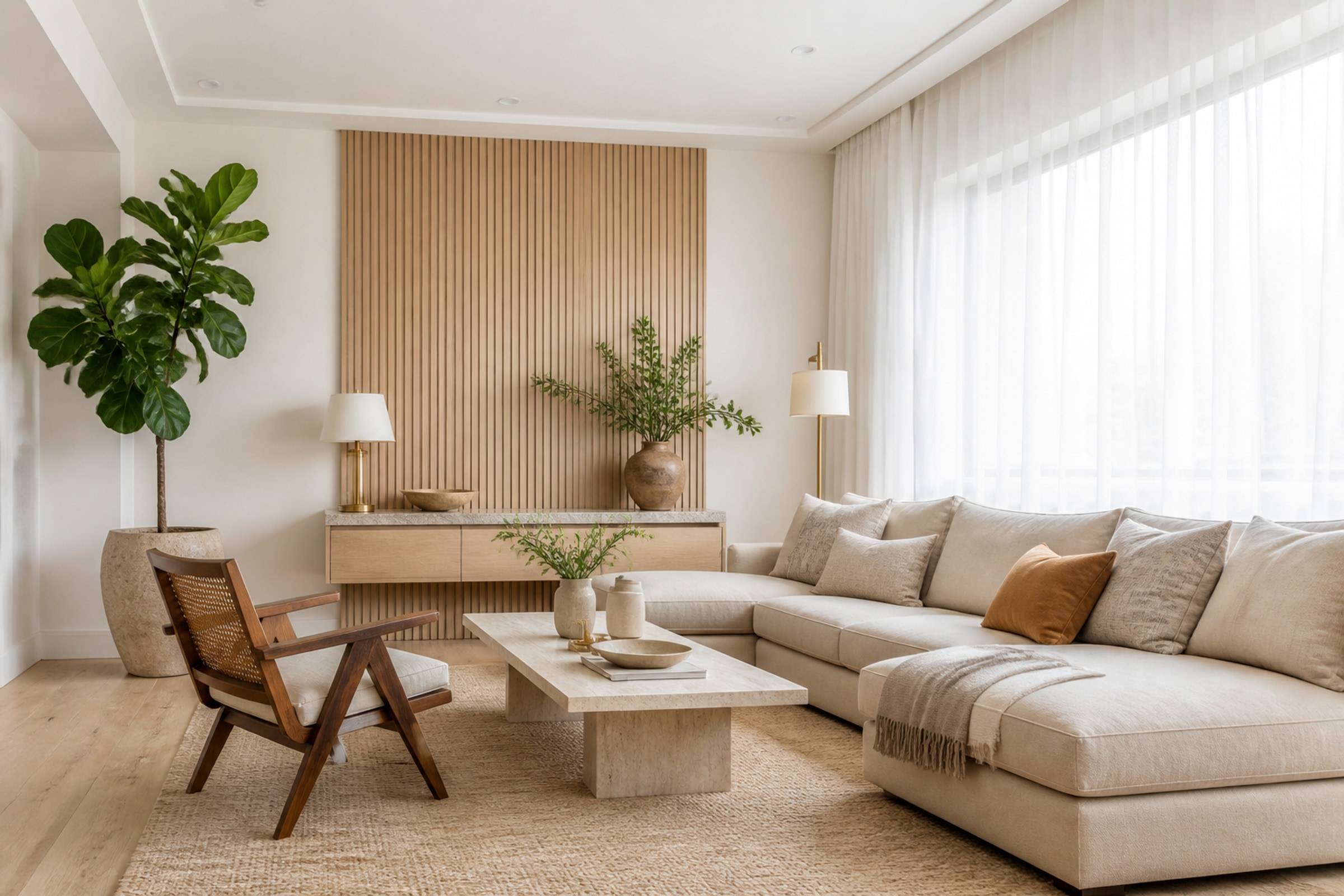
A wardrobe fails when internals are guessed. Measure the wall, list what you actually store, and choose sliding or hinged doors from clearance, not from a catalogue photo. The best bedroom storage disappears into daily use.
Wardrobe and Storage Planning
Plan wardrobes around hanging, folded, and daily-grab items so the bedroom stays clear.
Sizing
Depth and door type come first
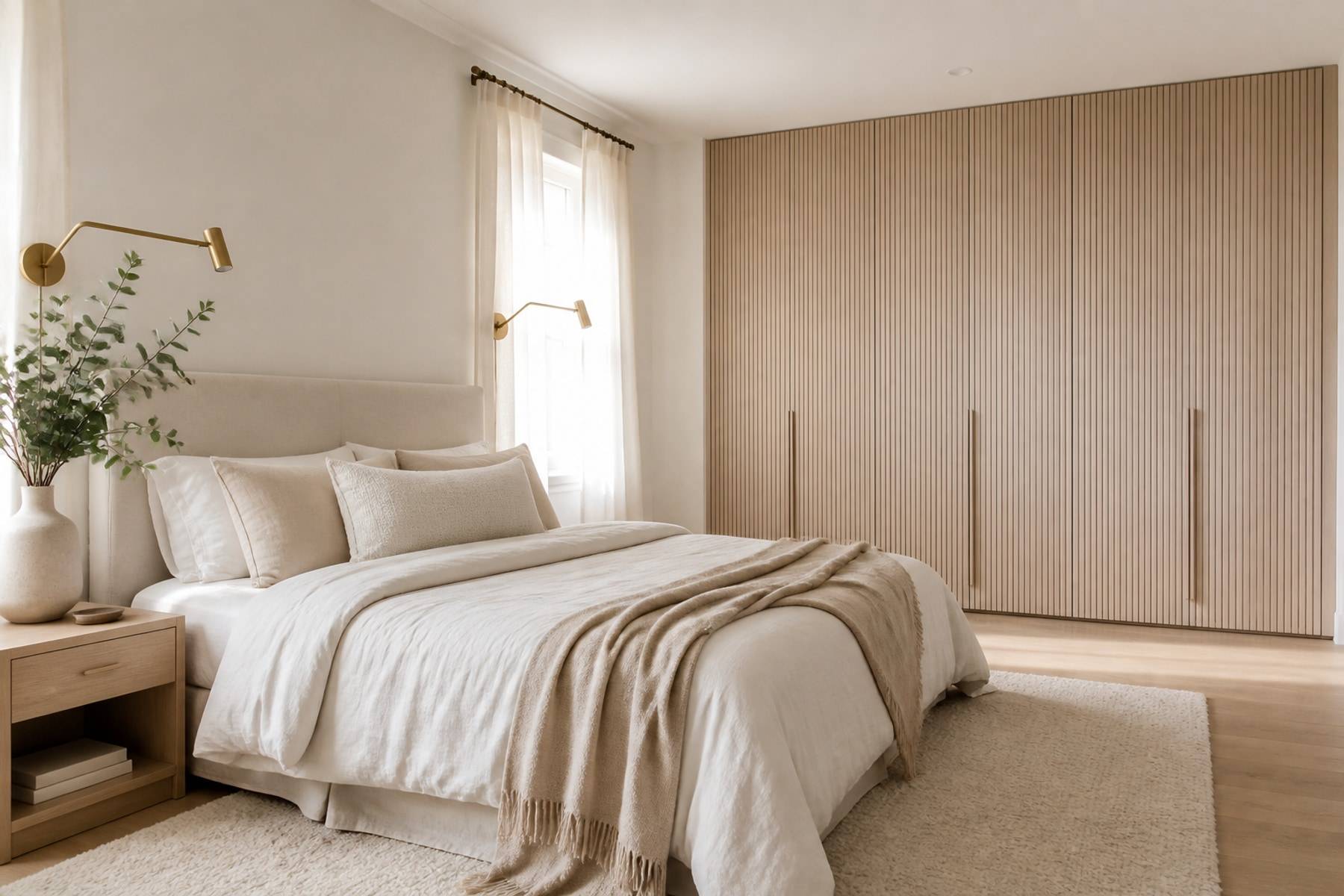
Hanging clothes need about 600 mm internal depth. Shallower units crush shoulders and make sliding doors feel tight. Loft units above can take seasonal bags if the bed still has headroom.
Hinged shutters need swing space beside the bed. Sliding systems suit tight rooms but need a clear track and a slightly wider opening to feel comfortable.
- Confirm bed clearance before locking wardrobe depth
- Separate hanging, folded, and accessory zones
- Keep a daily-grab shelf at standing height
- Plan loft access with a step or pull-down only if the ceiling allows
Internals
Fit the box to your inventory
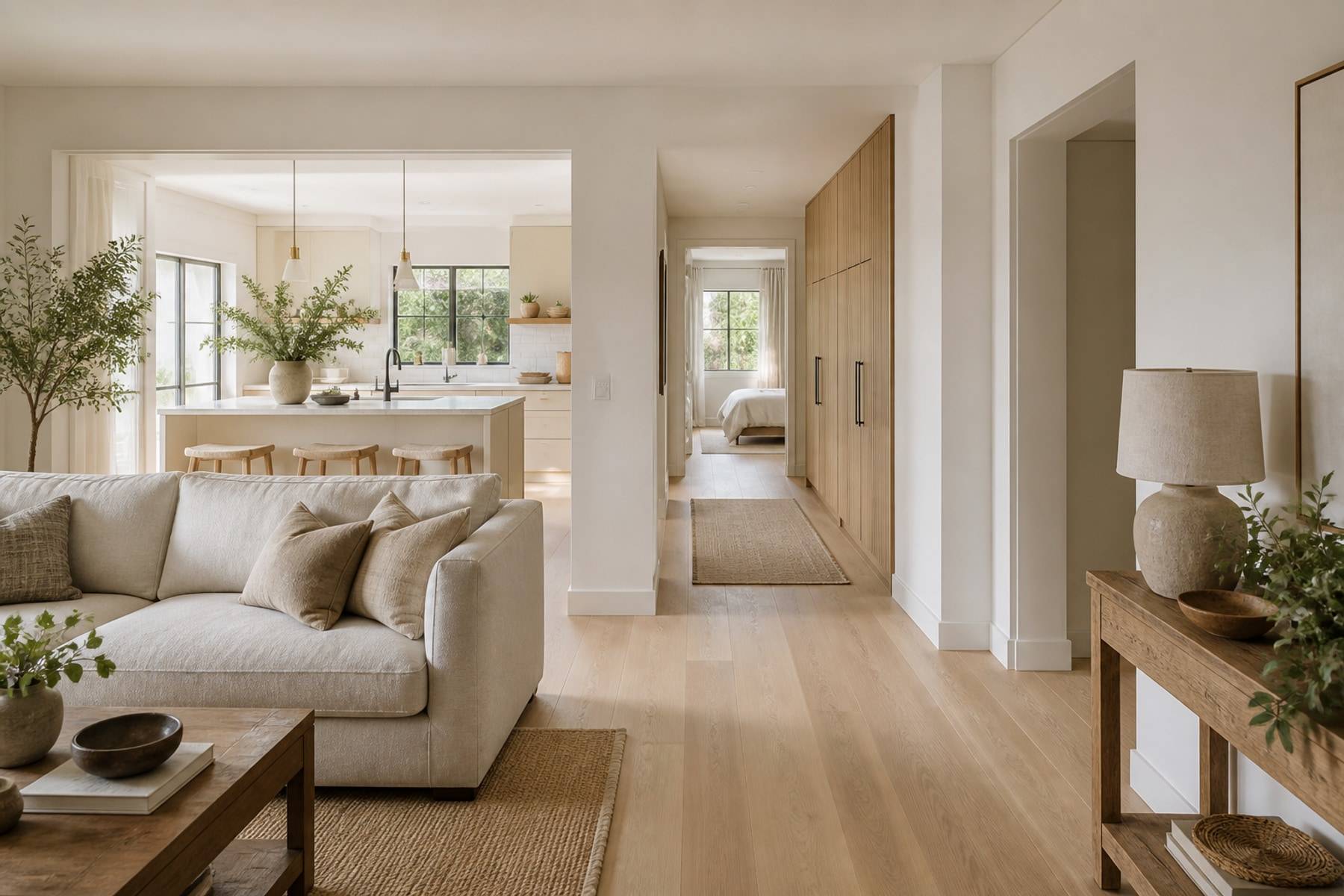
Count hanging lengths, saree stacks, and shoe pairs before you approve drawers. Generic three-drawer stacks waste the space that a mix of shelves and long hanging would use better.
Soft-close runners and LED strips inside the carcass make early-morning use quieter and safer. Leave a ventilation gap for humid Karnataka months so interiors do not smell stale.
- Full-extension drawers for inner wear and accessories
- Tie, belt, and watch trays instead of deep junk drawers
- A laundry hamper niche if the bathroom is far
- Mirror on a shutter only where the swing will not hit the bed
Hinged if you have swing space and want full-width access. Sliding if the bed sits close to the wardrobe wall.
Aim for about 600 mm internal for hanging. Walk-in layouts can go deeper if circulation around the island or bench stays clear.
Sometimes. We check plumb, moisture, and hardware first. Often a new factory carcass with your preferred shutters is cleaner and lasts longer.